Stenciling With Drawing Mediums
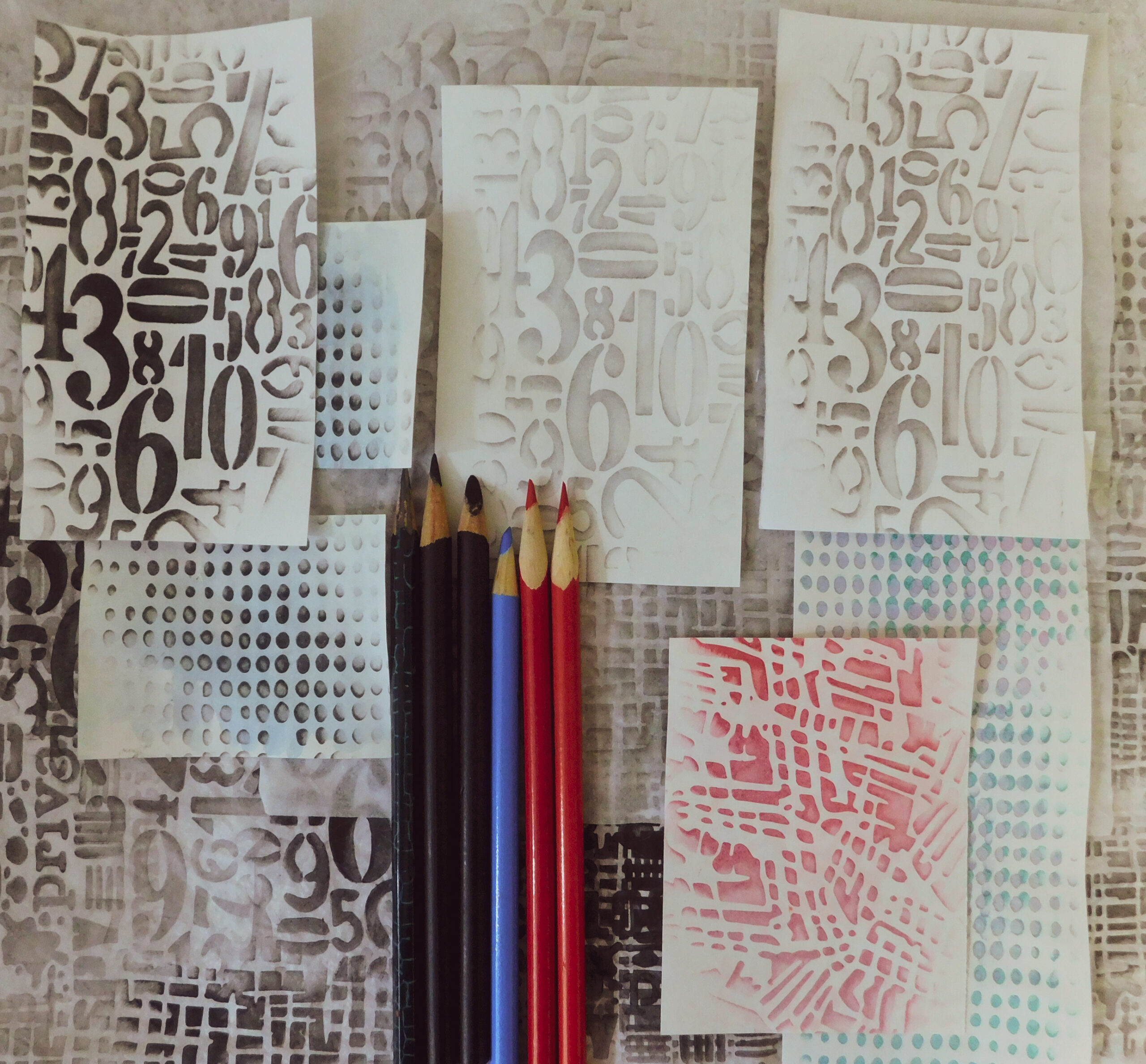
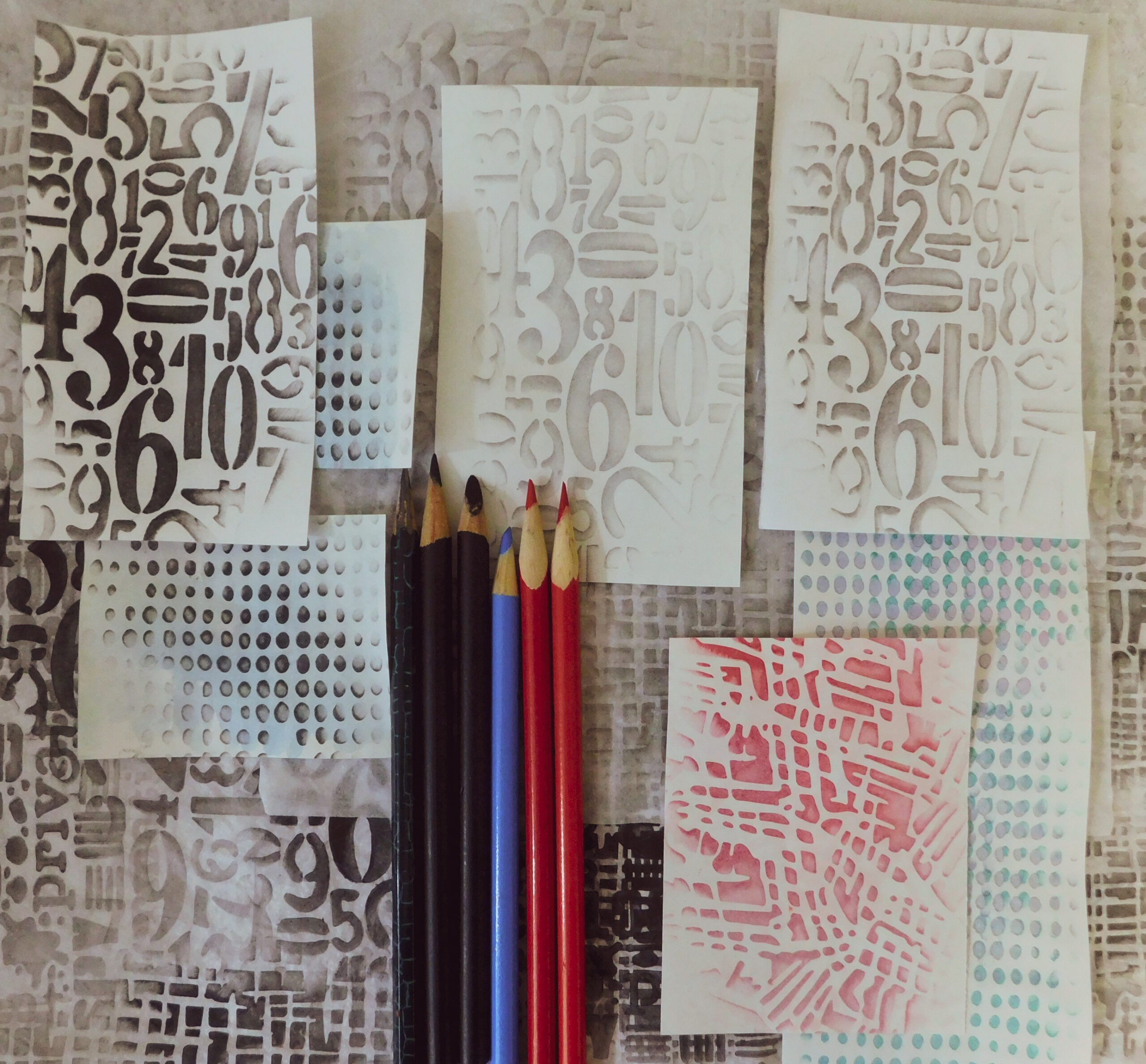
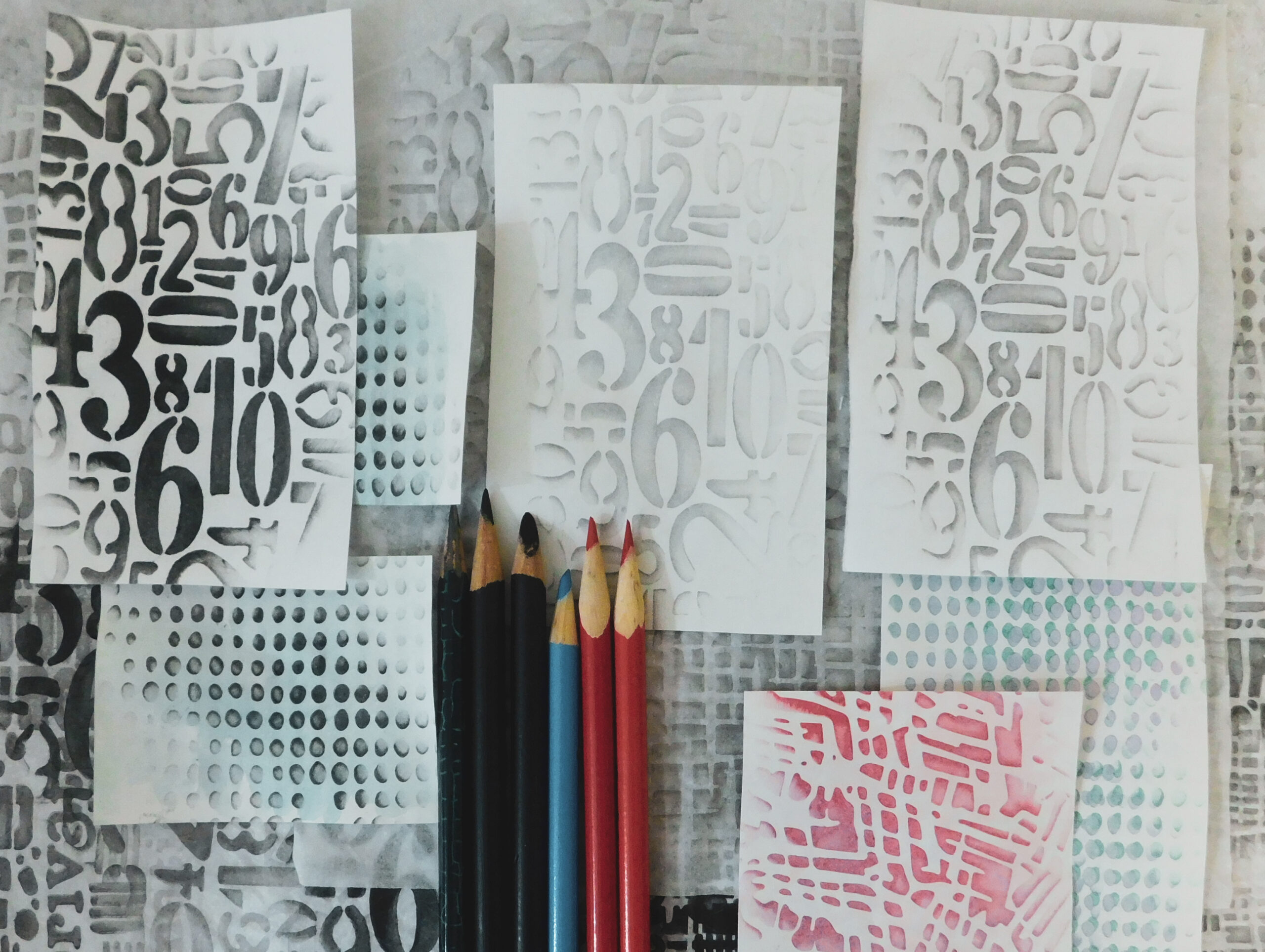
Stenciling with traditional drawing mediums opens up countless opportunities for creative exploration and discovery. Simple graphite pencils create soft, dimensional effects that resemble hand-drawn shading. Charcoal delivers bold black matte marks with dramatic contrast, while colored pencils offer an endless range of color. Best of all, these familiar materials are easy to find and can be dissolved or dispersed using rubbing alcohol to achieve painterly effects for stenciling.
What you’ll need to get started
- Drawing pencils (B types are softer and darker than H types)
- Charcoal pencils (B or H) or charcoal sticks
- Inexpensive colored pencils
- Rubbing alcohol and a small container (optional spritzer with mostly alcohol and a little water, especially for graphite)
- Sandpaper (essential for charcoal and colored pencils, which don’t transfer well to a palette)
- Paper of your choice: copy paper, tissue, sketchbook paper, book pages etc.
- Blending brushes
- Stencils of your choice
- A palette surface that can tolerate moisture and hold graphite—textured plastic works best. An old plastic placemat or notebook cover is ideal. Slick surfaces won’t work well, as the goal is to collect graphite that can be lifted with a blending brush.
Using graphite pencil
Cover your palette with graphite by coloring it heavily with your pencil. Lightly spritz the surface with a water and alcohol mixture. Load your blending brush with the graphite and stencil onto your chosen paper. If the brush feels too wet, blot it first. Use a light hand and build up layers gradually. Graphite can also be used for soft washes and blended backgrounds.
Using charcoal and colored pencils
Rub charcoal or colored pencil onto a small piece of sandpaper to create pigment dust. Dip your blending brush into alcohol, then gently pick up the dust from the sandpaper. Avoid over-wetting the brush or the sandpaper. Stencil in layers until you reach the desired depth and intensity. Graphite and colored pencil generally stay in place once dry. Charcoal may smudge, especially on smooth papers, so choose a surface with some texture, such as sketchbook paper. Using more rubbing alcohol with charcoal can help reduce smudging once dry, but a fixative may still be needed. Charcoal and colored pencils can also be used for washes and blended effects.
Creative ideas to try
Create collage fodder by stenciling onto tissue paper with graphite or charcoal. Use a variety of stencils and apply them randomly across a large sheet, then melt wax over the surface to create DIY vellum. Try graphite on book pages or use detailed stencils for a hand-drawn sketchbook look and to achieve effortless shading in journal pages. Colored pencil layers beautifully over watercolor, and both pencil and charcoal can be layered over or under watercolor for rich mixed-media effects.
Tip
Sandpaper can be rough on blending brushes. Use older brushes or dedicate a few specifically for working with these mediums. Grab a handful of pencils and start stenciling—you may discover new ways to stretch your imagination using these simple, everyday materials.
Happy paper crafting!


